Designing a last-mile logistics platform for a nationwide network
Abitab saw an opportunity in something it already had: a nationwide physical network. The idea was to use that footprint to solve one of e-commerce's hardest problems, the last mile, through smart lockers and assisted pickup/drop-off points.
01 / The challenge
A locker is only the visible part of the system.
From the customer's perspective, the experience looks straightforward: leave a package, someone else picks it up.
Behind that interaction sits a much larger logistics operation. The platform had to support different delivery models, including both automated smart lockers and assisted pickup/drop-off at Abitab locations. It also needed to coordinate several actors, and all of those flows needed to interact with physical infrastructure distributed across different types of locations.
- 01
Customers
Rent lockers, choose locations, make payments and track deliveries.
- 02
Couriers
Find available locations, drop off packages and manage delivery orders.
- 03
Agency operators
Receive and deliver packages through physical locations.
- 04
Corporate clients
Manage higher-volume logistics operations and contracted locker capacity.
- 05
Operations teams
Manage locations, lockers, pricing, commissions, users, reports and notifications.
02 / The approach
Define the operation before defining the software.
We worked directly with Abitab's business and technical counterparts through a structured discovery process.
The first step was understanding how the last-mile operation should work in the real world. From there, the product was broken down into the applications, modules and services required to support the operation.
The discovery produced detailed functional requirements and technical specifications that could be used as the foundation for implementation. Rather than starting with screens, we started with the system.
- ACTORS
- USER JOURNEYS
- BUSINESS RULES
- PHYSICAL OPERATIONS
- SYSTEM INTEGRATIONS
- EDGE CASES
03 / The solution
One logistics platform. Several operational experiences.
The resulting product definition covered multiple applications working around the same logistics operation.
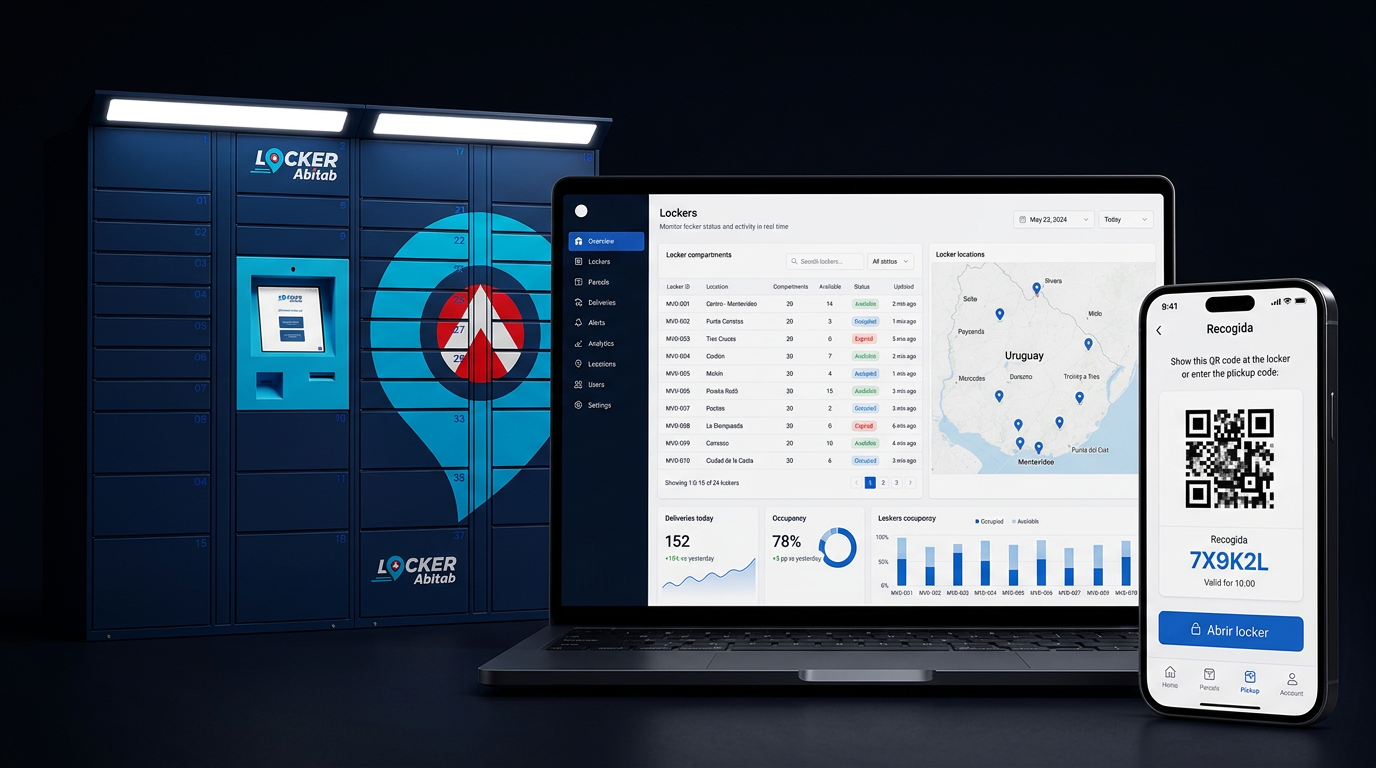
Customer App
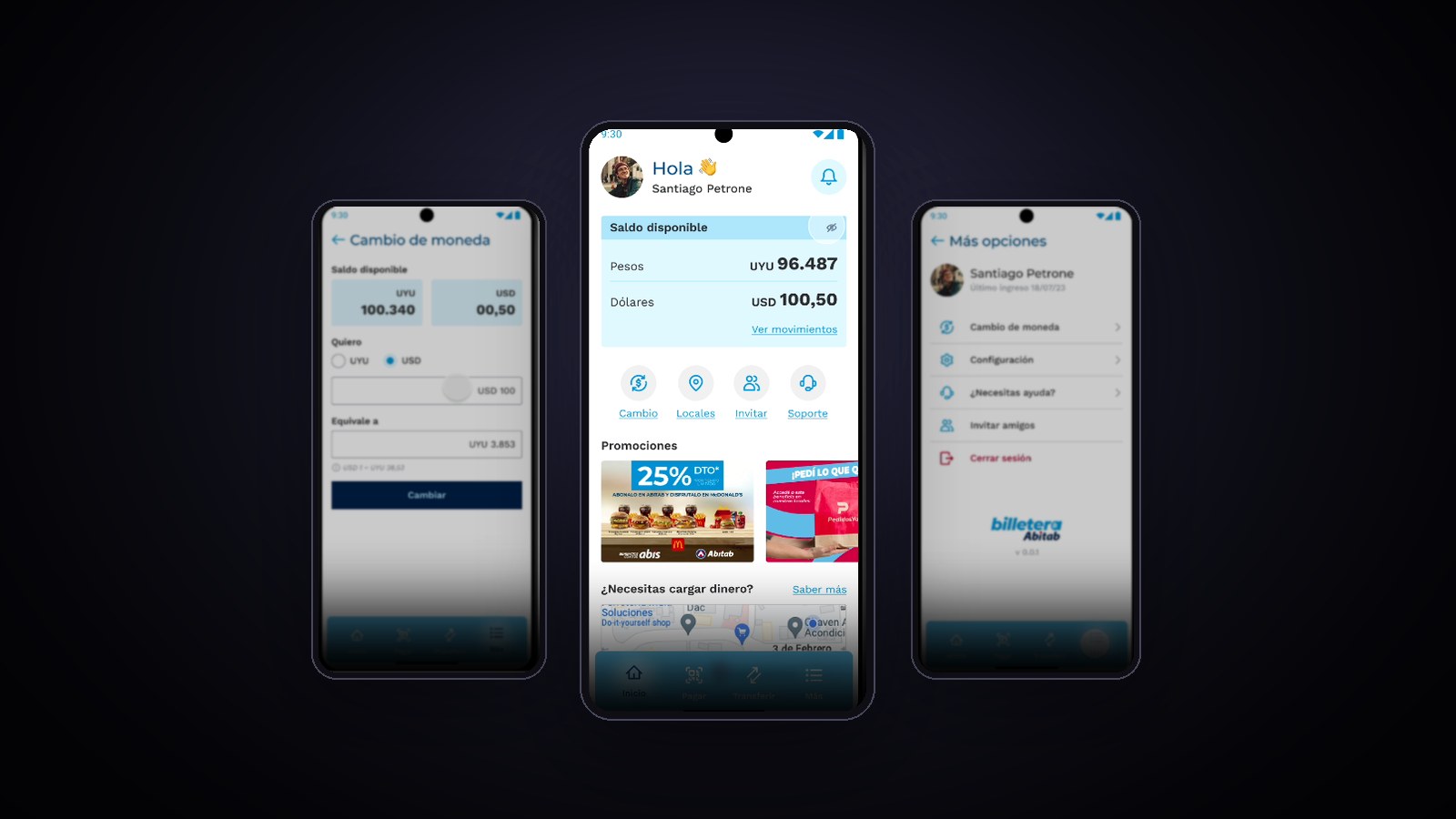
A digital experience for customers sending packages through the network. Users could select locations, check locker availability, choose locker sizes, define rental periods, select recipients and complete payment.
LOCKER SELECTION · PAYMENTS · DROP-OFF · PICKUPSmart Locker Experience
The software running at the physical locker handled the interaction between the digital platform and the hardware itself. Users could authenticate, reserve compartments, complete drop-offs, scan pickup codes and retrieve packages. The model also accounted for different locker configurations, combining active control modules with additional passive locker units.
PHYSICAL LOCKERS · ACCESS · RESERVATIONSCourier Operations
A dedicated experience supported logistics operators and couriers moving packages through the network. Couriers could identify nearby locations, check availability, select lockers, register sender and recipient information and complete drop-off workflows.
COURIERS · DELIVERY ORDERS · DROP-OFFAgency Operations
Not every location required a smart locker. The platform also defined workflows for Abitab locations operating as assisted Pick Up / Drop Off points, allowing staff to receive and deliver packages over the counter. This extended the model beyond hardware and made the broader physical network part of the logistics platform.
PUDO · AGENCY OPERATIONS · PICKUPBackoffice
The operational side required substantially more than parcel tracking. The backoffice specification covered users, roles and permissions; agencies and locker infrastructure; shelves and physical storage locations; pricing, discounts and surcharges; commissions; corporate customers; locker rentals; movements; notifications; reports and exports.
OPERATIONS · PRICING · INFRASTRUCTURE · REPORTING04 / The results
From an idea to an implementation-ready platform.
The discovery transformed a broad last-mile concept into a structured product and technical definition.
Instead of defining a locker application in isolation, the resulting model covered the complete ecosystem around it. The work gave Abitab a common product definition shared between business and technology teams before committing to implementation decisions.
- 5 OPERATIONAL SURFACES
- Customer, courier, agency, locker and backoffice experiences
- SMART LOCKERS + PUDO
- Automated and assisted last-mile models within the same platform
- END-TO-END FLOWS
- Reservation, payment, drop-off, notification and pickup
- FUNCTIONAL + TECHNICAL DEFINITION
- A detailed foundation for implementation across the ecosystem
05 / The bigger story
Physical products often create software problems that aren't visible at first.
A smart locker is hardware. But making hundreds of potential locations operate as one logistics network requires identity, pricing, payments, inventory, notifications, permissions, operational tooling and several different user experiences to work together.
For Alabama, this project is a good example of what discovery should accomplish: take a complex business idea, understand how it needs to operate, and turn it into something engineering can actually build.