


As the frontier for AI model performance slowly shifts from the grasp of private AI labs like Anthropic and OpenAI to open-source models following recent events in tech, it has become important to write this (short) guide.
For catch-up, Claude Fable — the highly anticipated ‘Mythos class’ model from Anthropic, which was released after a highly publicised but limited preview of its more powerful sibling — was recently banned indefinitely by the US government for safety reasons.
This event, and the succession of the ones that followed it, has had a cascading effect on other models, such as those of next-generation GPT models, whose use was soon restricted before widespread release.
The government’s argument this time, regarding the restriction on the new OpenAI models, remains the same —that models are becoming too powerful to not go through a vetted release phase, according to narratives coming from these labs themselves.
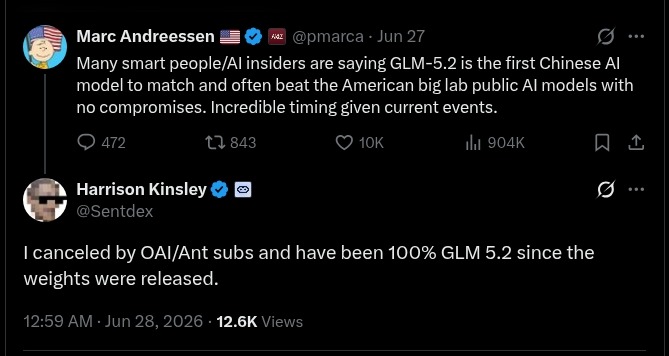
While this was going on in Silicon Valley, a litany of open-source models —primarily from labs in China- got released, in which AI experts who tested their capabilities admit have gotten dangerously close to the abilities of those of frontier labs in the US who are now having issues releasing their models.
This article is a response to the rise of these models.
As open-source AI gets better vis-à-vis closed ones and companies increasingly elect to use them primarily for cost and to protect intellectual property rights, the technical evaluation of these LLMs is expected to begin to take precedence in mainstream discourse.
As such, in this article, we’ll take a close look at how models are evaluated.
Brief history
As of writing, there are at least eight different highly regarded benchmarks and up to 300 that models may be put through. These benchmarks publicly verify model developers’ claims while contrasting or ranking them in relation to existing capabilities.
Benchmark for the recently released GLM 5.2 model shows parity
with the frontier ones.
While we are only going to take a look at four of the most popular ones in this piece, it is first appropriate to survey how these benchmarks came to be before seeing how to make sense of them and what they measure.
To start, there have been multiple phases of evolution for LLM evaluation. Some of the first LLM benchmarks came online from 2016 to 2018 as a reading-comprehension suite to test early models, such as Google’s BERT, in tasks like reading comprehension and sentence classification.
The second phase (approximately 2020 to 2022) saw benchmarks shifted toward broad knowledge tests, math word problems, and code generation.
By 2023 and onward, though, evaluation had again shifted towards graduate-level reasoning and tool use, as well as multimodal understanding.
Nevertheless, one of the most defining patterns with these benchmarks over the past years has been rapid saturation.
As models grow, almost every benchmark that becomes a public scorecard is matched or exceeded within a few years, forcing constant development of progressively harder tests.
Thankfully, for the benchmarks we have chosen to profile here, this threshold remains intact, and as such, they have remained trustworthy and consistent in the industry.
SWE-bench
First on the list of benchmarks to familiarize with as a founder is SWE-bench.
The benchmark has become the industry standard benchmark for evaluating AI software engineers.
It works in the following way.
Instead of asking a model to solve programming puzzles, SWE-bench gives the model:
- a real GitHub repository
- a real bug report (GitHub Issue)
- the entire codebase
- and hidden tests that it must pass.
The reasoning is that to pass, the model must:
- understand the issue
- inspect the repository
- edit multiple files
- produce a patch
- pass every hidden test in much the same way a human would.
The issue is only considered solved if all tests are passed.
With SWE-bench, the issues that models are expected to solve are problems that actual developers encounter.
The benchmark simultaneously evaluates models on many abilities that include code understanding, repository navigation, debugging, reasoning, long context handling, software architecture, and patch generation.
While the signal-to-noise ratio that follows the saturation we talked about above has led to the development of a ‘Pro’ version of this benchmark, which now includes a wider variety of test languages and tasks, the benchmark, including its previous iteration, remains useful for evaluating how AI models perform.
MCP-Atlas
Another of the benchmarks of concern to businesses should be MCP-Atlas.
Here, the model’s test goal isn’t to focus on how well they resolve GitHub issues or reason through a codebase, but how easy they make tool use feel. Tools are api that extend the capability of models that are exposed through MCP servers.
With MCP Atlas testing, models are connected to at least 36 MCP servers and 220 tools, in which they are expected to discover, coordinate, manage, and utilize them when the actions that these tools define are queried against.
An example of a tool that may be given to a model through an MCP server returns the weather status of the country that was passed into it as an argument by the model.
Unlike simpler benchmarks that focus on single-function calls or simulated APIs, MCP-Atlas emphasizes realistic workflows that require models to synthesize outputs from multiple tools to produce accurate final answers.
Its existence addresses a key deployment gap: models may excel at reasoning or conversation but can fail at reliable end-to-end tool use.
DeepSWE
Going further, DeepSWE was designed to evaluate AI systems on software engineering tasks that go well beyond the scope of traditional bug fixing, like SWE-bench.
Rather than resolving GitHub issues, DeepSWE focuses on large, multi-step engineering work that resembles real development projects, such as:
- implementing substantial new features
- coordinating changes across many files or modules
- maintaining architectural consistency
- making design decisions over long time horizons
- integrating testing and documentation into the workflow
The emphasis here is on sustained reasoning, planning, and execution rather than producing a single correct patch.
It is intended to stress test autonomous software engineering agents that must manage complex repositories over extended interactions.
Humanity’s Last Exam
Perhaps the most infamous of benchmarks.
The Humanity’s Last Exam test of models is completely different. Instead of coding, it tries to answer: Can AI solve problems that even experts struggle with?
The test contains thousands of expert-written questions spanning dozens of disciplines that include:
- Mathematics
- Physics
- Chemistry
- Biology
- Medicine
- Economics
- Philosophy
- Law
- Engineering
- History
- Linguistics
- Computer science
The questions in this test are intentionally designed to be difficult for both humans and AI systems. Many questions require combining knowledge from multiple fields, all in one, rather than simple factual recall.
In fact, some have argued that this test represents the best pointer to look to when deciding how close current models are to the goal of artificial general intelligence.
Why benchmark scores can be misleading
Aside from the fact that, with every week, another AI lab shows up to claim its newest model is the smartest ever built —with each announcement usually coming with colourful graphs showing one model outperforming another—proving that more nuance is required to properly read any meaning to these claims, founders who are a bit closer to the builders of these systems on the spectrum may know also that it is not true to think of models packing more parameters as more intelligent or better.
“A parameter is a calculation in a neural network that applies a great or lesser weighting to some aspect of the data, to give that aspect greater or lesser prominence in the overall calculation of the data. It is these weights that give shape to the data and give the neural network a learned perspective on the data.
Increasing weights over time has led to amazIng benchmark test results by the GPT family of programs, and by other large Transformer derivatives, such as Google’s BERT, results that have been consistently quite impressive.” — Tiernan Ray
This is because a model that tops one benchmark can perform noticeably worse on the work your company actually cares about.
What makes a good benchmark?
Having said that, it’s easy to see why a good benchmark is the one that matters for your use case as a founder.
The rapid bloat that models have acquired over the past few months has also meant that a good benchmark must be difficult.
Be difficult
Only a few years ago, models were in the sub-100 billion parameter range. But as models become increasingly capable and tests are being «solved» within months, making them less useful for comparing the next generation of AI systems, this parameter for judging AI benchmarks becomes increasingly important.
A benchmark should challenge even the most capable frontier models. If nearly every model achieves close to 100%, the test no longer provides meaningful information.
Resist memorization
Given that models are trained on enormous portions of the internet, data contamination is a constant concern.
If benchmark questions have appeared in training data, a model may simply recall the answers instead of demonstrating genuine reasoning.
High-quality benchmarks therefore, use newly created, unpublished, or carefully curated questions to minimize memorization.
Measure real-world capability
Furthermore, excelling at abstract puzzles is useful, but the most valuable benchmarks reflect the kinds of tasks people actually perform in the real world.
Modern evaluations increasingly measure software engineering, scientific reasoning, tool use, long-context understanding, planning, and multimodal reasoning because these better predict how useful a model will be in production.
As such, it is important that your go-to benchmark of choice mirrors your real-world workflow as a business.
Remain reproducible
Having said this, different researchers should be able to evaluate different models under the same conditions and obtain comparable scores with your benchmark of choice.
Clear evaluation protocols, standardized prompts, and transparent scoring methods are essential if a benchmark is to be useful.
Evolve over time
Finally, as we’ve seen from above, every benchmark has a shelf life. As models improve, yesterday’s challenge quickly becomes today’s baseline.
The strongest benchmarks are therefore updated regularly with harder tasks or entirely new versions to remain useful as the state of the art advances.
Where Alabama fit
For founders evaluating AI systems, these five characteristics matter because benchmark scores are only as meaningful as the benchmark itself.
Before comparing two models, it is often more important to ask whether the benchmark being cited is still measuring something difficult, relevant, and trustworthy.
This is where having a partner like Alabama becomes useful.
At Alabama Solutions, we partner with founders daring to move fast to build out next-generation infrastructure in the AI era.
If you’re a founder:
- Curious about LLMs and how you might harness them for your workflow
- Preparing your infrastructure for AI
- Looking to build defensible AI-native software projects
Our Innovation Lab is, without doubt, ready to have you reach out for a talk.
We can help you prototype, test, and deploy intelligently without overcommitting capital at the experimental stage.
Contact us today directly below to request a free consultation session with our experts.