
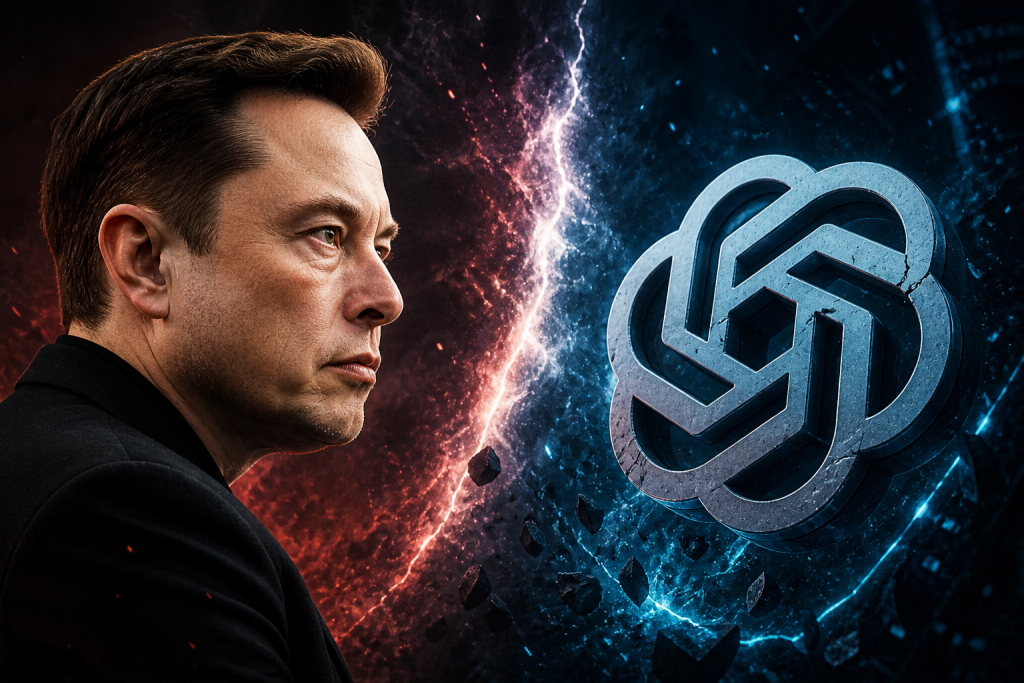
If you’ve been following tech even casually, you’ve probably seen headlines about Elon Musk going to court against OpenAI this week. And no, it’s not just another billionaire dispute. This case touches the future of AI, how it’s funded, and who gets to control it.
In this article we share a clear breakdown of what actually matters.
1. This started as a friendship and collapsed into a power struggle
Elon Musk and Sam Altman weren’t always on opposite sides. They co-founded OpenAI in 2015 with a shared idea to build AI for the benefit of humanity, not profit.
But that relationship broke down by 2018, when Musk left after internal disagreements over control and direction.
And what we’re seeing now is essentially that fallout playing out in public.
2. The core accusation: OpenAI “betrayed” its mission
Musk’s central claim is that OpenAI was supposed to be a nonprofit. Instead, it became a profit-driven company tied closely to Microsoft.
He argues this shift violated the original agreement and misused his early support and donations.
He has framed it bluntly in court as “stealing a charity.”
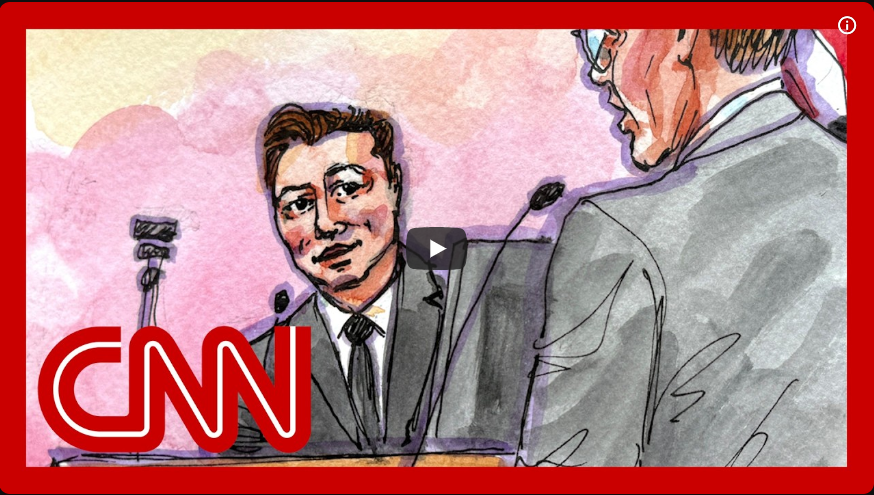
Elon Musk testified that he was “a fool” for providing the funds to help start OpenAI
3. Musk knew and even supported the shift
OpenAI isn’t denying the transition to a for-profit structure. Their argument is different.
They say Musk was aware of the plan and even pushed for similar ideas before leaving.
They also claim his lawsuit is less about principle and more about competition, especially with his own AI company, xAI.
4. This isn’t just about money but the money is massive
The numbers involved are staggering:
- Musk is seeking roughly $134–$150 billion in damages and
- Says any payout would go to OpenAI’s nonprofit arm
- He also wants leadership changes and structural reversal
At the same time, OpenAI itself is reportedly heading toward a potential $1 trillion valuation, which raises the stakes even higher.
5. The legal case has already been narrowed
Originally, Musk’s lawsuit included fraud claims.
However, those were dismissed.
What remains are more specific legal arguments of breach of charitable trust and unjust enrichment.
This matters because they shift the case from “did they lie?” to “did they misuse a nonprofit structure?”
Related: SpaceX IPO and Its Implications for AI and the Silicon Valley Ecosystem
6. The trial is exposing OpenAI’s early internal dynamics
Consequently, one of the most interesting parts about this trial isn’t the arguments but the evidence.
Emails, internal notes, and testimonies are showing that:
- Musk had deep early involvement
- There were already disagreements over governance from the start
- Control of AGI was already a tension point years ago
As such, this isn’t a sudden conflict but a buildup of nearly a decade of struggles.
7. Musk’s own position isn’t as clean as it sounds
Nevertheless under cross-examination, some details have complicated Musk’s own narrative:
- He admitted there wasn’t a formal contract governing his donations
- Acknowledged not fully reading some founding documents and
- There are suggestions he previously explored for-profit structures for OpenAI himself
Although that doesn’t invalidate his case, it weakens the idea that the agreement was clearly defined and places doubt on his rationale for initiating legal proceedings.
8. The judge is actively limiting the scope
Furthermore, at several points in the hearing, Musk tried to expand the discussion into a broader area of AI risks for which the judge pushed back, making it clear that this case is about legal agreements and not existential AI debates.
According to The Guardian reporter, at one point, even Musk’s references to doomsday scenarios in the hearing were cut off as irrelevant.
9. The outcome could reshape the AI industry
Regardless of court theatrics though, this legal battle has the potential to go beyond just these two players and companies.
If Musk wins:
- OpenAI could be forced to restructure with its
- leadership changed and
- future AI funding models could be affected
If OpenAI wins:
- it reinforces the idea that AI labs can evolve into commercial giants
Either way, it sets precedent for how AI organizations might balance their mission and profit goal.
10. At its core, this is about control of AI
Ironic as it seems as some analyst have observed, when you strip away the legal language of this case, the reason for the conflict becomes clearer:
- Who controls advanced AI systems and how should we fund them?
- Should they be nonprofit, public-good entities?
- Or profit-driven companies competing at scale?
It seems that Musk is arguing for the first model while OpenAI is operating in the second.
Regardless, the uncomfortable truth is that both models have benefits and tradeoffs.
Final Thought
Although It’s tempting to see this as just another tech feud.
We encourage you that it isn’t.
This case is forcing a question the industry has avoided for years. Can you build something as powerful as advanced AI without needing to turn it into a business?
While Musk is saying that such transformation is a betrayal and OpenAI is arguing it’s a necessity the court will ultimately decide which it is with the legal outcome.
Irrespective of how that goes, the tech industry will be dealing with that question long after this trial ends.
Looking for help to validate your AI business idea? Reach out to us through the form below.
We help strategic individuals and businesses build and deliver big ideas through our innovation lab. Don’t take our word; see our case studies for details.
Read next: The Founder-Marketer’s Guide to Programmable GPT Ads – Alabama